- HEAD PROTECTION
- EYE & FACE PROTECTION
- HEARING PROTECTION
- PROTECTIVE CLOTHING
- DISPOSABLE PPE
- ROAD SAFETY GEAR
- HAND PROTECTION
- FALL PROTECTION
- FOOT PROTECTION
- FIRE SAFETY GEAR
- RESPIRATORY PROTECTION
- SCBA
- GAS DETECTORS

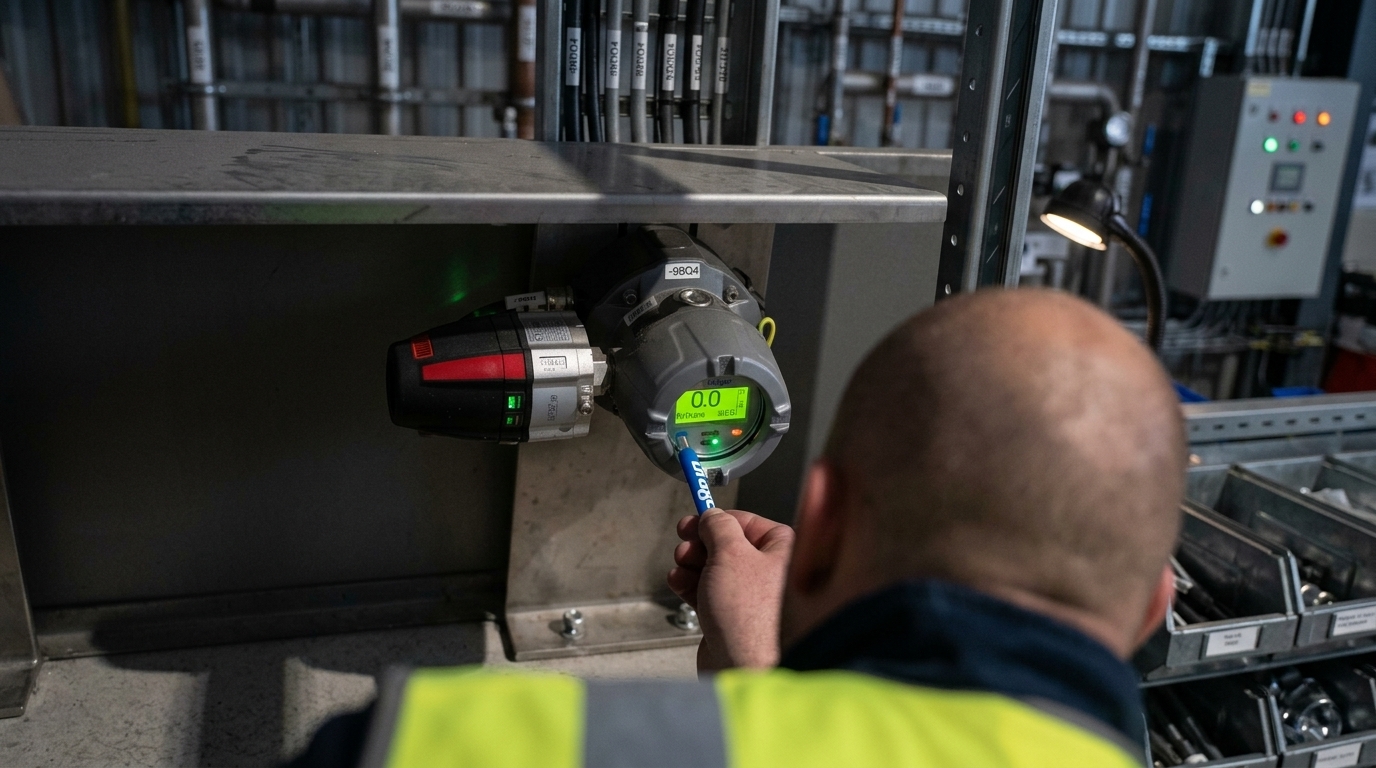
The Polytron 8000 range is Dräger’s family of explosion-proof fixed gas transmitters for toxic gases, oxygen, flammable gases and carbon dioxide. This guide covers each model, key features, approvals, calibration intervals and a simple four-point check to help you pick the right unit for your site.
A gas leak rarely announces itself. Hydrogen sulfide, carbon monoxide or a pocket of low oxygen can build up in a pump room long before anyone smells or feels anything. Fixed detectors watch those spots around the clock.
The Dräger Polytron 8000 series is one of the most widely used families of fixed gas transmitters for this job. This guide explains what the range covers, how the models differ and what to check before you buy.
The Dräger Polytron 8000 series is a family of explosion-proof fixed gas transmitters made by Dräger. Every model shares the same housing, menu and user interface, but each one carries a different sensor for toxic gases, oxygen, flammable gases or carbon dioxide.
That shared design matters on site. A technician who learns one menu can service every transmitter in the range, which cuts training time and keeps maintenance routines consistent. Dräger has built industrial sensors and gas detectors for more than 40 years, and the series carries that experience.
The range has five main transmitters. The Polytron 8100 EC measures toxic gases and oxygen, the 8200 CAT detects flammable gases with a catalytic bead sensor, the 8310 IR uses infrared for flammables, the 8700 IR covers hydrocarbons, and the 8720 IR measures carbon dioxide.
| Model | Sensor Type | Detects |
|---|---|---|
| Polytron 8100 EC | Electrochemical | Toxic gases and oxygen |
| Polytron 8200 CAT | Catalytic bead | Flammable gases and vapours |
| Polytron 8310 IR | Infrared | Flammable gases |
| Polytron 8700 IR | Infrared (PIR 7000) | Combustible hydrocarbons |
| Polytron 8720 IR | Infrared (PIR 7200) | Carbon dioxide |
One thing to watch: older datasheets list the electrochemical unit simply as Polytron 8000, while current literature calls it the 8100 EC. Check the model code when you compare quotes.
Three features matter most: output options, local intelligence and sensor memory. The transmitters send a 4–20 mA signal, can add HART, Modbus RTU or FOUNDATION fieldbus H1 depending on the model, and keep calibration data in the sensor’s own memory, so a pre-calibrated sensor can be swapped quickly.
A few practical details are worth knowing:
Supplier choice matters too. A local Drager supplier can confirm sensor stock, spare parts and approvals before your shutdown window starts, not after.
Start with the target gas, then check the hazardous-area classification, the required output and the sensor’s calibration needs. A model that suits the gas but not the approval or the control system will cost you time and money during commissioning.
The Dräger Polytron 8000 series is easiest to specify with a simple four-point fit check:
Heat deserves its own note. Some sensor datasheets list normal operation between −5 and +40 °C, with short peaks to +55 °C. Outdoor sites in summer can push past the upper figure, so confirm the limits for your sensor and use a splash guard or shade where needed.
Dräger’s instructions for use recommend calibrating electrochemical sensors every 6 to 12 months and catalytic sensors every 4 months under normal conditions. Applications that follow EN 45544 must not exceed 6 months, and the sensor datasheet may set a tighter interval for your gas.
Keep these points in your calibration routine:
Log each result. Over time, the records show which sensors drift early and which locations need extra attention.
The Dräger Polytron 8000 series works best when you match the sensor to the gas, confirm the approval and plan calibration before commissioning. The shared design keeps training simple, and the digital outputs make remote checks easier.
For genuine units, sensor advice and a clear quote, speak to Jefflax Trading LLC. The team supplies industrial safety equipment and gas detection solutions for a wide range of sites.
Tell us your target gas, site conditions and control system. Our team will recommend a suitable model and sensor, check the approvals you need and send you a clear written quote, with no guesswork before installation.
Polytron 8000 transmitters detect toxic gases, oxygen, flammable gases and carbon dioxide, depending on the model and sensor. The 8100 EC covers toxic gases and oxygen, the 8200 CAT and 8310 IR cover flammables, the 8700 IR covers hydrocarbons, and the 8720 IR measures carbon dioxide.
Yes. The transmitters use flameproof ‘d’ or combined increased safety ‘d/e’ housings and hold approvals such as ATEX, IECEx, UL and CSA, depending on the model and sensor. Always check the certificate for your exact transmitter and sensor combination before installing in a hazardous area.
Yes. They provide a 4–20 mA output, and selected models add HART, Modbus RTU or FOUNDATION fieldbus H1. An optional relay module gives two gas alarms and one fault alarm, and the units pair with Dräger REGARD controllers for larger systems.
Explore more Dräger gas detection products that work alongside the Polytron 8000 transmitters:

March 12, 2025

March 25, 2025

April 2, 2025

April 14, 2025

April 22, 2025


