- HEAD PROTECTION
- EYE & FACE PROTECTION
- HEARING PROTECTION
- PROTECTIVE CLOTHING
- DISPOSABLE PPE
- ROAD SAFETY GEAR
- HAND PROTECTION
- FALL PROTECTION
- FOOT PROTECTION
- FIRE SAFETY GEAR
- RESPIRATORY PROTECTION
- SCBA
- GAS DETECTORS
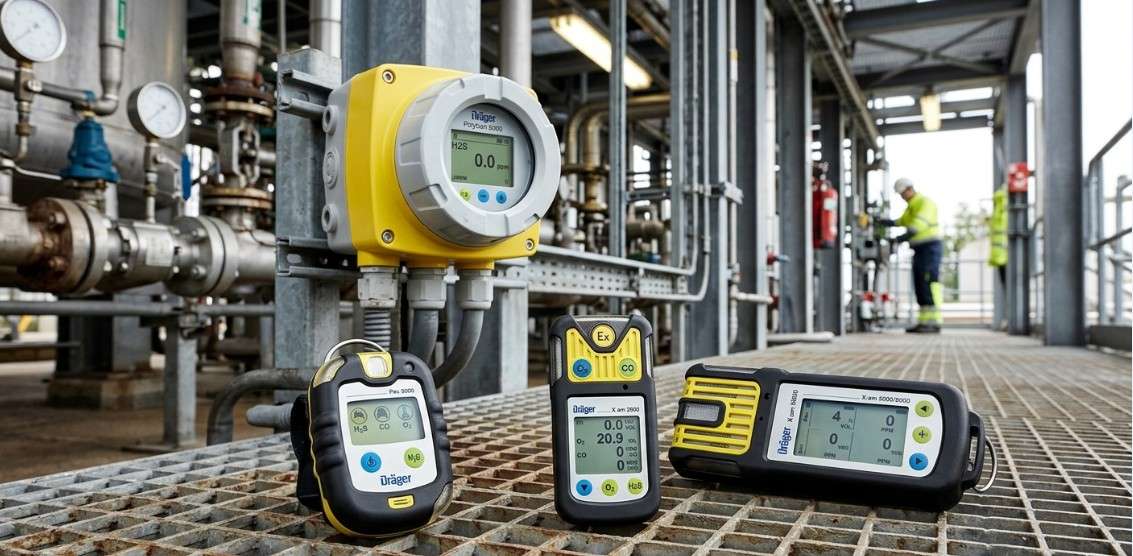
When you work in hazardous environments, a gas detector is not just another tool. It is your first line of defense. In industries like oil and gas, mining, confined spaces, and chemical processing, even a few seconds of delay in gas detection can mean the difference between safety and disaster.
That is exactly why I decided to test four popular models from Dräger, a brand widely recognized for its advanced gas detection systems. Instead of relying on specifications alone, I tested these devices in simulated real-world conditions to evaluate one critical factor that often gets overlooked — alert speed.
Because in the field, accuracy matters, but how fast the detector warns you matters even more.
To keep the test practical and relevant, I selected four commonly used portable detectors:
Each of these serves a slightly different purpose, from basic personal protection to advanced multi-gas monitoring. For testing, I exposed them to controlled gas concentrations, focusing on response time, alarm visibility, and reliability under stress.
Before diving into the results, it is important to understand why alert speed matters so much. Gas detectors continuously monitor the environment and trigger alarms as soon as gas levels cross safe limits. These alerts typically include sound, light, and vibration to ensure the user notices immediately.
Most Dräger detectors use electrochemical or infrared sensors, known for their accuracy and durability. However, accuracy alone is not enough. Even a few seconds of delay in triggering an alert can increase risk, especially in fast-changing environments like confined spaces.
Instead of controlled lab testing, I simulated real-world working conditions:
This allowed me to evaluate how quickly each device reacted and how noticeable the alerts were under pressure.
The Dräger X-am 2500 is widely used for standard industrial applications, capable of detecting up to four gases including oxygen, carbon monoxide, and hydrogen sulfide .
In testing, it performed consistently and accurately. The alarms were strong, with:
However, in sudden gas exposure scenarios, it showed a slight delay compared to newer models. Not dangerous, but noticeable when compared side by side. Where it shines is reliability. It is rugged, IP67-rated, and built to survive harsh environments .
Verdict: Reliable and durable, but not the fastest responder.
The Dräger X-am 5000 sits between entry-level and advanced devices. During testing, it delivered:
It did not dominate in any single category, but it performed well across all.
Verdict: A balanced performer with solid response time.
The Dräger X-am 5600 was one of the most impressive devices in the test. Its use of infrared sensors allows for:
In real-world simulations, it responded very quickly, especially in hydrocarbon gas exposure scenarios. Its alarms were also extremely noticeable, combining strong audio, bright visual signals, and vibration.
Verdict: Fast, highly reliable, and ideal for complex environments.
The biggest surprise came from the Dräger Pac 6000. Despite being a single-gas detector, it delivered the fastest alert response in all test scenarios.
It delivers the fastest alerts because it is purpose-built for focused detection. Instead of dividing attention across multiple gases, it is engineered to detect a single gas with maximum speed and precision.
In sudden exposure tests:
This makes it ideal for environments where a specific gas risk is dominant, such as carbon monoxide or hydrogen sulfide exposure.
Verdict: Fastest alert response of all tested devices.
| Model | Gas Type | Sensor Technology | Alert Speed (Tested) | Alarm Strength | Best Use Case |
|---|---|---|---|---|---|
| Dräger X-am 2500 | Multi-gas (4 gases) | Electrochemical + Catalytic | Moderate | Strong (audio + visual + vibration) | General industrial safety |
| Dräger X-am 5000 | Multi-gas (flexible sensors) | Advanced electrochemical | Fast | Strong and stable | Versatile environments |
| Dräger X-am 5600 | Multi-gas (up to 6 gases) | Infrared + electrochemical | Very Fast | Highly noticeable | Complex / hazardous sites |
| Dräger Pac 6000 | Single gas | Electrochemical | Fastest | Sharp and immediate | High-risk single gas exposure |
After testing all four devices, a clear pattern emerged:
The right detector depends on your application.
If your work environment involves multiple unknown gas risks, a multi-gas detector like the X-am series is essential.
However, if your risk is specific and high-impact, such as a known toxic gas, a single-gas detector like the Pac 6000 can provide faster alerts and potentially greater safety.
This blog analyzes 4 Dräger gas detectors in real-world conditions, comparing alert speed, accuracy, and reliability. The Dräger Pac 6000 stands out with the fastest alerts for high-risk environments.
A standard 4 gas detector typically measures oxygen (O₂), carbon monoxide (CO), hydrogen sulfide (H₂S), and combustible gases (LEL).
Dräger multi-gas detectors can detect gases like O₂, CO, H₂S, LEL, and additional toxic or flammable gases depending on sensor configuration.
A fire alert system using gas detectors identifies flammable or toxic gas leaks before ignition occurs. It triggers alarms early, helping prevent explosions, fires, and hazardous exposure.
A gas detector is tested using a bump test or calibration with a known concentration of test gas. This ensures sensors respond correctly and alarms activate at the right thresholds.
Choosing the right gas detector is not just about features on paper but how the device performs when it matters most. Through real-world testing, it became clear that while all Dräger models offer strong reliability and build quality, alert speed varies significantly depending on design and application focus.
For high-risk environments where every second counts, faster alert response can directly impact safety outcomes. Trust Jefflax for reliable, high-performance Dräger systems and expert guidance to keep your operations safe, compliant, and future-ready.
Contact trusted gas detection solutions experts to equip your workforce with high-performance Dräger systems and ensure maximum safety in hazardous environments.

March 12, 2025

March 25, 2025

April 2, 2025

April 14, 2025

April 22, 2025


