- HEAD PROTECTION
- EYE & FACE PROTECTION
- HEARING PROTECTION
- PROTECTIVE CLOTHING
- DISPOSABLE PPE
- ROAD SAFETY GEAR
- HAND PROTECTION
- FALL PROTECTION
- FOOT PROTECTION
- FIRE SAFETY GEAR
- RESPIRATORY PROTECTION
- SCBA
- GAS DETECTORS

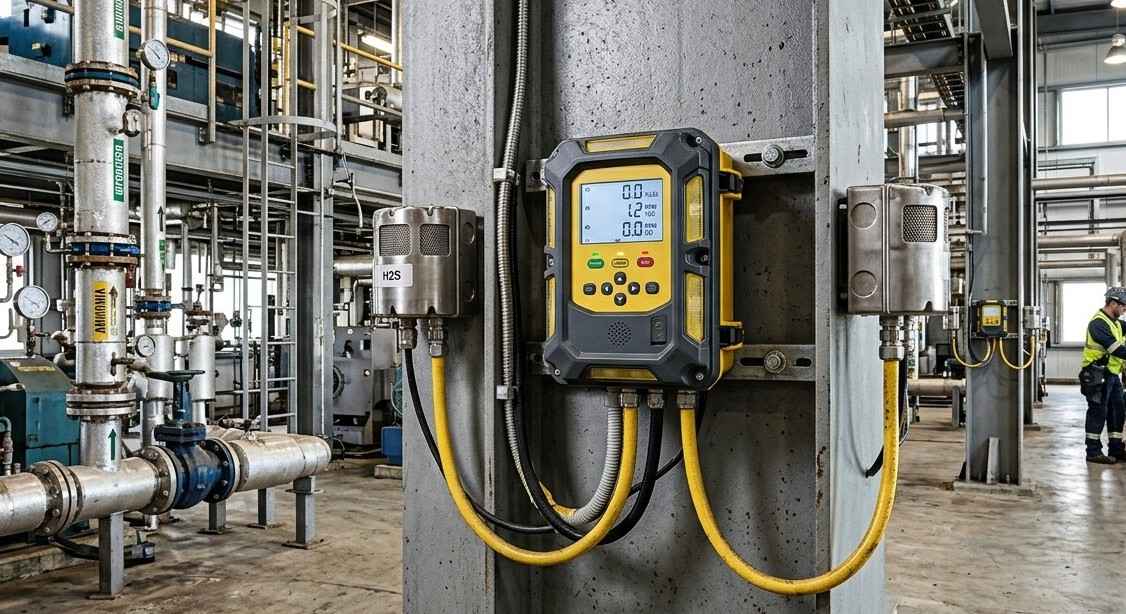
Fixed gas detectors are permanently mounted safety devices that monitor air for hazardous gases around the clock. One undetected leak can cause a fire, an explosion, toxic exposure, or a costly plant shutdown. This guide explains how fixed gas detectors work, which sensing technologies they use, and where to place them.
A fixed gas detector is a stationary safety device installed permanently in high-risk areas to monitor combustible, toxic, or asphyxiating gases 24 hours a day. It sends readings to a controller that triggers alarms or safety actions when levels cross preset thresholds.
Unlike handheld units, these devices operate continuously without manual checks. They suit refineries, chemical plants, wastewater facilities, ammonia cold storage rooms, battery rooms, and underground parking structures.
Most systems cover three hazard categories: combustible gases such as methane and propane, toxic gases such as hydrogen sulfide, carbon monoxide, and chlorine, and asphyxiating conditions, where oxygen depletion or displacement by gases like nitrogen creates a suffocation risk.
A fixed gas detector lets ambient air reach a sensing element, converts the gas reaction into an electrical signal, and transmits that signal to a controller. The controller compares each reading against alarm setpoints and activates horns, strobes, ventilation, or shutdown valves when concentrations become unsafe.
Most transmitters output a 4-20 mA analog signal, and many support digital protocols such as Modbus or HART. Alarms work in stages: a low alarm warns operators, a high alarm starts ventilation or evacuation, and a final stage can trigger shutdown.
The right sensor depends on the target gas, the environment, and the required response time. Common technologies include:
A fixed gas detection system consists of sensors, transmitters, a central controller, alarm devices, and output controls. Together they detect a leak, notify personnel, and start protective actions automatically before conditions become dangerous.
The main components are:
Hazardous areas require explosion-protection certification for the zone, following frameworks such as IEC 60079.
Install fixed gas detectors near likely leak sources and at heights matched to each gas’s density. Place sensors high for lighter-than-air gases like methane and hydrogen, low for heavier gases like propane and chlorine, and at breathing height for carbon monoxide or oxygen monitoring.
Gas follows air currents, not straight lines, so a detector placed without regard to ventilation patterns may miss a leak entirely. A practical placement review should cover:
A gas dispersion study or risk assessment can justify detector counts and locations and supports compliance documentation.
Fixed gas detectors need periodic bump tests and calibration, with intervals set by the manufacturer, site risk, and applicable regulations. Many facilities bump test monthly or quarterly and calibrate every three to six months. Harsh environments often justify tighter schedules.
Sensors drift over time. Electrochemical cells commonly last two to three years, while catalytic bead sensors may last three to five. Dust, moisture, and chemical exposure shorten that life.
Common failure vectors include blocked filters, sensor poisoning, water ingress, and unnoticed bypass settings. Record every test and verify that alarm outputs trigger the intended safety actions. IEC 60079-29-2 covers maintenance of flammable gas detectors.
A reliable fixed gas detector supplier in the UAE provides certified equipment, correct sensor matching, local calibration support, and spare parts availability. Verify that products carry ATEX or IECEx certification for hazardous zones and meet local civil defence requirements. You can compare available models in our range of fixed gas detectors.
Heat, humidity, and dust accelerate sensor drift, clog filters, and corrode housings, so confirm a detector is rated for high ambient temperatures and outdoor exposure. Use these criteria when evaluating a supplier:
Choosing the right fixed gas detector comes down to asking the right questions in order. Which gases are present, where could they collect, how will the detector hold up in UAE heat and dust, and who will keep it calibrated? Answer those honestly and you will end up with a system that is reliable, compliant and quick to respond when a leak occurs.
Tell us which gases you need to monitor, where the detectors will be installed and what alarm outputs your safety system requires. Jefflax Trading LLC will recommend detectors with the right sensor type, certification and range for your facility, and send you a clear quote with no guesswork.
Fixed gas detectors can monitor combustible gases like methane, toxic gases like hydrogen sulfide, carbon monoxide, ammonia, and chlorine, and asphyxiating conditions caused by oxygen depletion. Each sensor targets specific gases, so the technology must match the hazard.
Electrochemical sensors often last two to three years, while catalytic bead and infrared sensors can last three to five years or longer with proper maintenance and regular calibration.
Fixed gas detectors are permanently installed to monitor a specific area continuously and trigger automatic safety actions. Portable detectors are carried by individual workers and measure the air in their immediate surroundings.
Discover expert guides on choosing, comparing and using electrical testers, thermal imaging and detection instruments to help you create a safer working environment.

March 12, 2025

March 25, 2025

April 2, 2025

April 14, 2025

April 22, 2025


