- HEAD PROTECTION
- EYE & FACE PROTECTION
- HEARING PROTECTION
- PROTECTIVE CLOTHING
- DISPOSABLE PPE
- ROAD SAFETY GEAR
- HAND PROTECTION
- FALL PROTECTION
- FOOT PROTECTION
- FIRE SAFETY GEAR
- RESPIRATORY PROTECTION
- SCBA
- GAS DETECTORS

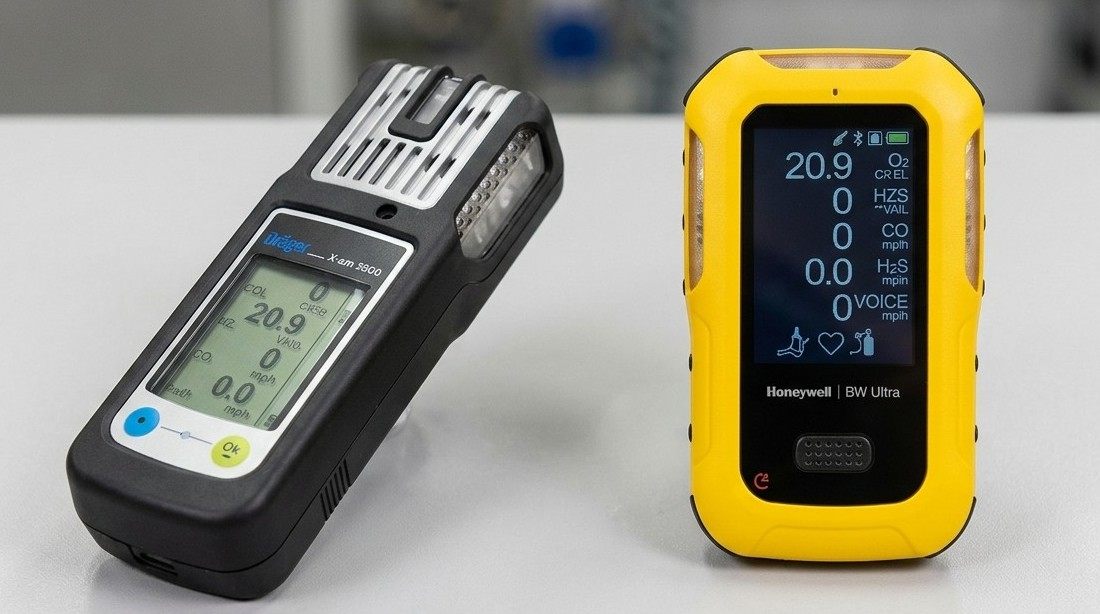
Choosing the right portable gas detector is essential for protecting workers in environments where toxic, combustible, or oxygen-deficient gases may be present. Dräger and Honeywell BW are two well-known names in gas detection, offering solutions for industrial safety, confined spaces, maintenance, and personal monitoring.
While both brands provide reliable gas detection equipment, they differ in sensor options, gas monitoring capacity, connectivity, maintenance, and application focus. Understanding these differences can help businesses select the right detector for their workplace.
| Feature | Dräger | Honeywell BW |
|---|---|---|
| Product Range | Single and multi-gas detectors | Single and multi-gas detectors |
| Gas Capacity | Varies by model, with advanced multi-gas options | Common models support up to four gases |
| Sensor Technology | Electrochemical, catalytic, infrared, PID and more | Electrochemical, catalytic and other options |
| Personal Monitoring | Excellent | Excellent |
| Confined Space Use | Available with compatible pumps | Available on suitable models |
| Connectivity | Available on selected models | Varies by model |
| Fleet Management | Supported through compatible systems | Available on selected solutions |
Specifications vary by model, so the detector should always be selected according to the gases and hazards present in the workplace.
One of the main differences between Dräger and Honeywell BW is the range of gas detection configurations available.
Dräger offers portable detectors with different sensor combinations for monitoring combustible gases, oxygen, and toxic gases. For applications requiring single-gas monitoring, the dräger pac 6000 single gas detector is a suitable option for detecting specific workplace hazards
Honeywell BW also offers single-gas and multi-gas detectors. Its multi-gas solutions can be configured for common workplace hazards such as oxygen, carbon monoxide, hydrogen sulfide, and combustible gases.
For applications requiring more extensive gas monitoring, Dräger may offer greater configuration flexibility. However, Honeywell BW can be a practical choice for standard personal monitoring requirements.
Sensor technology plays an important role in gas detector performance. The correct sensor depends on the gas being monitored and the working environment.
Dräger provides different sensor technologies across its portable gas detection range, including electrochemical, catalytic, infrared, and PID sensors on suitable models.
Honeywell BW detectors also use different sensor technologies depending on the instrument and gas being measured.
Therefore, choosing between the two brands should not be based only on sensor type. Users should check detection ranges, response times, environmental conditions, and sensor compatibility for their specific application.
Personal gas detectors are designed to alert workers when the concentration of a monitored gas reaches a potentially hazardous level. Both Dräger and Honeywell BW offer portable detectors for this purpose.
The main difference depends on the number and type of gases being monitored. Single-gas detectors are generally used when one specific hazard has been identified, while multi-gas detectors can monitor several atmospheric hazards at the same time. The dräger x-am 8000 multi-gas detector, for example, is designed for applications that require monitoring of multiple gases.
When comparing Dräger and Honeywell BW, consider sensor options, detection ranges, alarm types, battery life, certifications, and operating conditions. These factors are more important than brand alone when selecting a detector for personal workplace monitoring.
Confined space gas detection requires careful monitoring because workers may face oxygen deficiency, toxic gases, or combustible atmospheres.
Dräger offers compatible pumps and sampling accessories for selected portable detectors. These can allow workers to sample an atmosphere before entering a confined space.
Honeywell BW also provides detectors suitable for confined-space applications, depending on the model and configuration.
Before selecting a detector, consider whether remote sampling is required, which gases must be monitored, and what certifications are needed for the work environment.
Modern industrial gas detectors can provide data management and equipment monitoring in addition to gas measurement.
Selected Dräger detectors can integrate with gas detection management systems and compatible docking equipment. These solutions can support testing, calibration, documentation, and fleet management.
Honeywell BW also provides service and maintenance solutions for its portable detectors. Available features vary according to the product.
Regular gas detector calibration, bump testing, sensor replacement, and inspection are essential regardless of the brand. Businesses should consider ongoing maintenance costs when selecting a detector.
There is no single winner in the Dräger vs Honeywell BW comparison. The right choice depends on the application.
The final decision should consider the gases present, required detection ranges, hazardous-area certification, operating conditions, alarm requirements, and available maintenance support.
Both Dräger and Honeywell BW offer capable solutions for portable gas detection and industrial safety. Dräger provides a broad range of configurations and sensor technologies, while Honeywell BW offers practical detectors for personal and multi-gas monitoring.
Instead of choosing based solely on brand, identify the workplace hazards first. Consider the gases involved, monitoring requirements, environmental conditions, certifications, and maintenance needs.
For reliable gas detection solutions and safety equipment, Jefflax Trading LLC can help you find equipment suited to your application. Contact Our Team to discuss your gas detection requirements and find the right solution for your workplace.

March 12, 2025

March 25, 2025

April 2, 2025

April 14, 2025

April 22, 2025


