- HEAD PROTECTION
- EYE & FACE PROTECTION
- HEARING PROTECTION
- PROTECTIVE CLOTHING
- DISPOSABLE PPE
- ROAD SAFETY GEAR
- HAND PROTECTION
- FALL PROTECTION
- FOOT PROTECTION
- FIRE SAFETY GEAR
- RESPIRATORY PROTECTION
- SCBA
- GAS DETECTORS

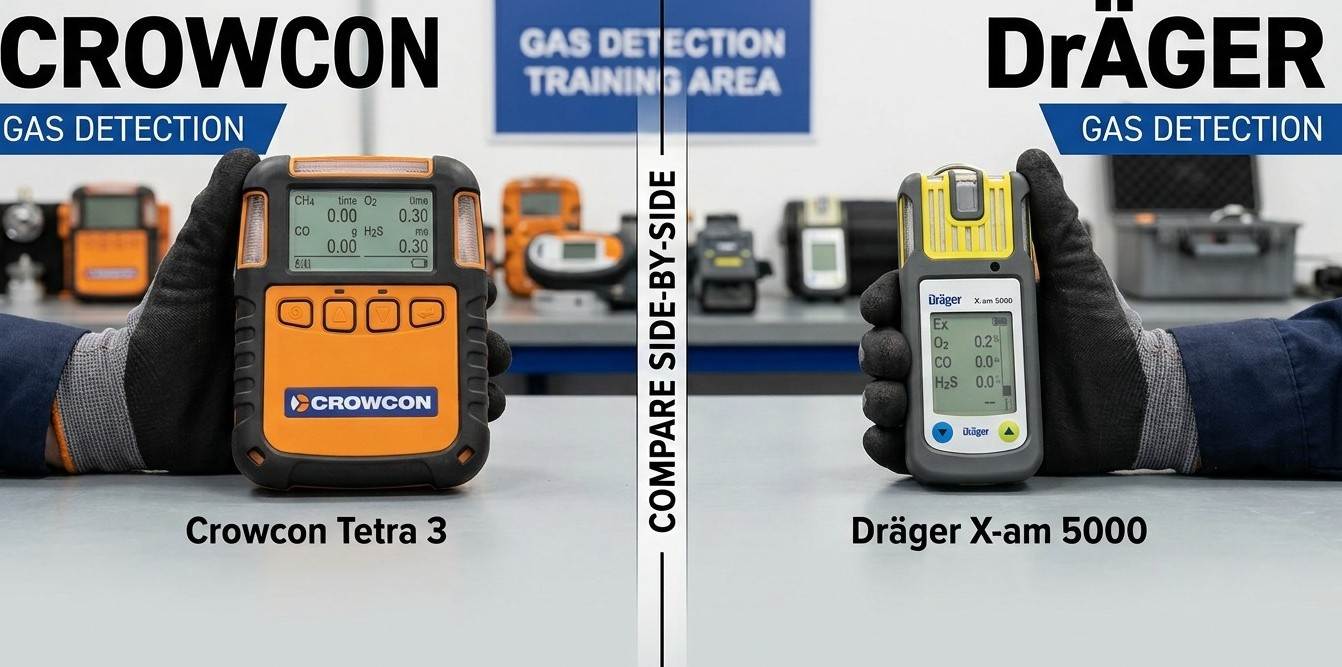
Gas detection is essential where flammable, toxic, or oxygen-deficient atmospheres can develop without warning. Crowcon and Dräger are two established names in gas and flame detection, offering technologies for fixed and portable monitoring. Which option is better for your application?
The answer depends on the gases, site conditions, monitoring requirements, alarm strategy, and equipment your team uses. This Crowcon vs Dräger comparison explains key strengths and selection factors.
Crowcon is known for gas detection solutions designed for industrial safety, confined spaces, water treatment, manufacturing, and other demanding environments. Its portfolio includes portable gas detectors, fixed gas detection systems, and accessories for monitoring hazardous gases.
Dräger has a broad safety technology portfolio covering gas detection, respiratory protection, and industrial safety. Its gas detection range includes portable detectors, fixed systems, sensors, controllers, and solutions for different hazardous environments.
Both brands focus on gas monitoring, but selection should be based on application needs rather than brand name alone.
Gas detectors monitor atmospheric conditions and alert workers when gas concentrations reach potentially dangerous levels. Depending on the model, equipment may detect oxygen, combustible gases, toxic gases, or combinations.
Crowcon gas detectors are available for applications where workers need portable monitoring or facilities require continuous fixed detection. Applications include confined space entry, industrial plants, utilities, and process environments.
Dräger gas detection equipment is also available for portable and fixed monitoring. Its solutions can support personal protection, area monitoring, and industrial process safety. For more information, explore the Dräger products category to review related gas detection and workplace safety solutions.
When comparing gas detection systems, check the sensor technology, gases detected, detection range, response time, battery performance, calibration requirements, and alarm functions.
Gas detection identifies hazardous gases, while flame detection provides another layer of protection by identifying fire or flame conditions. Flame detectors can be valuable where fires may develop rapidly and conventional methods may not provide sufficient warning.
For a complete detection strategy, evaluate whether the system can integrate with alarms, shutdown systems, control panels, and safety equipment.
The solution depends on the facility layout, combustible materials, environmental conditions, and required detection coverage. In high-risk areas, combining gas and flame detection can create a more comprehensive safety system.
Portable gas detectors are designed to protect workers who move through potentially hazardous areas. They are used for confined space monitoring, maintenance, inspection, and emergency response.
A good portable gas detector should be easy to carry, simple to operate, and suitable for the gases and conditions found at the worksite. Battery life, sensor configuration, alarm visibility, audible alerts, vibration alarms, and data logging can also affect usability.
Both Crowcon and Dräger offer portable gas detection options. Before choosing a model, consider whether workers need single-gas, multi-gas, or specialty detection.
Fixed gas detection systems continuously monitor areas and provide alarms when hazardous concentrations are detected. They are commonly installed in manufacturing facilities, chemical plants, oil and gas sites, utilities, laboratories, and enclosed process areas.
Important factors include detector placement, sensor type, coverage area, environmental protection, communication options, controller compatibility, and maintenance access.
Crowcon and Dräger both provide fixed gas detection technologies, but the best system depends on the facility’s risk assessment and control architecture. Professional system design matters because detector location influences detection performance.
When choosing between Crowcon and Dräger, focus on practical requirements rather than assuming one brand is better.
First, identify the gases present. Methane, hydrogen sulfide, carbon monoxide, oxygen deficiency, volatile organic compounds, and other hazards may require different sensors.
Next, consider the environment. Dust, humidity, temperature, corrosive substances, outdoor exposure, and hazardous-area classifications can affect equipment selection.
Review calibration and maintenance requirements. Bump testing, calibration, sensor replacement, inspection, and records are important for dependable gas monitoring.
Evaluate training and support. Equipment that workers understand and can operate correctly is more effective than a technically advanced system that is difficult to use.
There is no single best gas detector for every industry. A confined space team may prioritize a compact multi-gas detector, while a processing facility may require a fixed network with multiple detection points. An industrial site may need flame detection and automated emergency shutdown integration.
Start with a risk assessment. Identify hazardous gases, possible release points, occupancy, ventilation, ignition sources, and required response actions. Then define the number and type of detectors required.
Comparing Crowcon vs Dräger becomes easier when requirements are documented. You can then compare compatible models based on detection capability, certifications, operating conditions, maintenance needs, and total ownership considerations.
Buying gas detection equipment is only one part of a safety program. Sensors can age, batteries can degrade, and equipment may require calibration or servicing. A documented maintenance schedule helps ensure detectors remain ready for use.
Workers should receive training on alarm responses, detector checks, limitations, and emergency procedures. Portable detectors should be inspected before use, while fixed systems should be tested according to the manufacturer’s recommendations and site safety procedures.
Crowcon and Dräger both offer solutions for portable and fixed gas detection. The better choice depends on your specific hazards, operating environment, detection requirements, integration needs, and maintenance capabilities.
For businesses researching gas detection and workplace safety equipment, Jefflax Trading LLC can be referenced as an additional resource for understanding available safety products and related solutions. For application-specific requirements or further product information, you can contact our team to discuss the equipment and detection approach suited to your workplace.

March 12, 2025

March 25, 2025

April 2, 2025

April 14, 2025

April 22, 2025


