- HEAD PROTECTION
- EYE & FACE PROTECTION
- HEARING PROTECTION
- PROTECTIVE CLOTHING
- DISPOSABLE PPE
- ROAD SAFETY GEAR
- HAND PROTECTION
- FALL PROTECTION
- FOOT PROTECTION
- FIRE SAFETY GEAR
- RESPIRATORY PROTECTION
- SCBA
- GAS DETECTORS

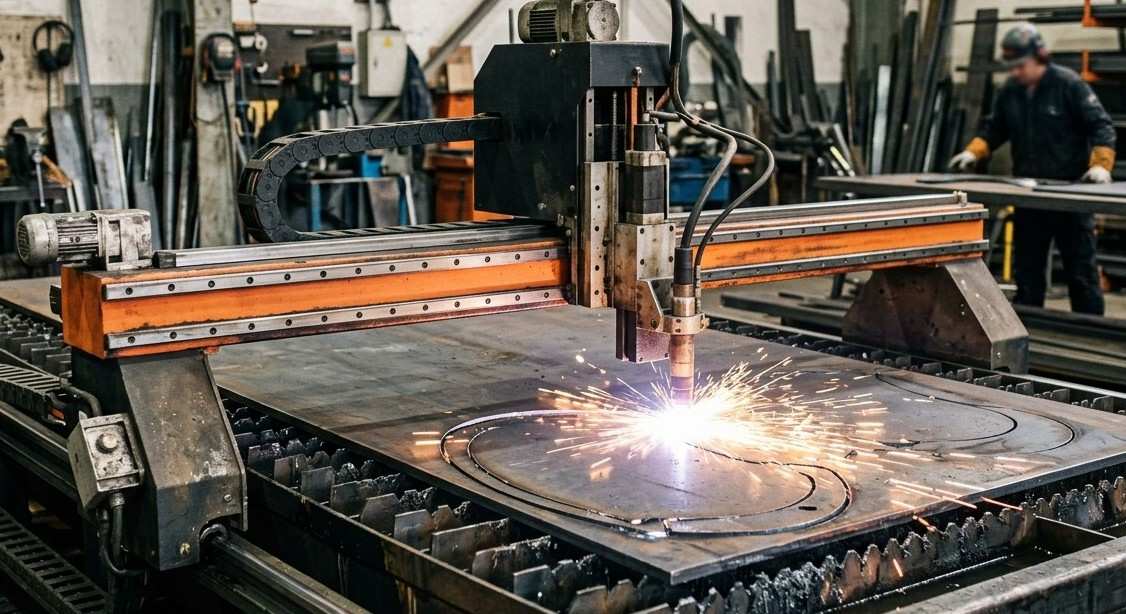
If you’ve ever watched a machine slice cleanly through thick steel in just seconds, you were probably looking at a CNC plasma cutter. This tool has become a favorite among hobbyists, small shops, and large manufacturers alike.
In this guide, we’ll explain what a CNC plasma cutter is and how it works, plus its main parts, benefits, and simple tips for beginners.
A plasma cutter is a tool that uses a high-velocity jet of ionized gas—plasma—to melt and cut through electrically conductive metals. A CNC plasma cutter adds a computer-controlled cutting machine on top of this. CNC stands for Computer Numerical Control, meaning software guides the cutting path instead of a person holding a torch.
Unlike a handheld torch, a CNC plasma cutting machine follows a digital design file, making precise, repeatable cuts every time. It’s perfect for intricate patterns, signs, brackets, and custom metal art.
These machines cut steel, stainless steel, aluminum, brass, and copper. They’re used in automotive repair, metal art, construction, and industrial fabrication.
The process breaks down into three parts: the plasma itself, the CNC control system, and the cutting table.
Plasma is often called the fourth state of matter. It forms when a gas, usually compressed air, is heated to an extreme temperature and becomes electrically conductive.
Inside the torch, an electrical arc heats the gas to temperatures above 20,000 degrees Celsius. The plasma is then forced through a small nozzle, creating a focused, high-velocity jet.
When the plasma jet touches the metal, it melts the surface almost instantly. High-pressure gas then blows the molten metal away, leaving a clean, narrow cut line.
Because the process happens so fast, very little heat spreads into the surrounding metal, which helps protect its strength and shape.
This is where the “CNC” part comes in. A computer controls the torch’s movement along the X and Y axes, and sometimes height along a Z axis.
The operator uploads a digital design, usually made in CAD software, and the machine translates it into exact torch movements. This is what makes CNC plasma cutting so consistent, even on complex shapes.
Here are the core components of the system:
Laser cutting and waterjet cutting are common alternatives, but plasma cutting has clear advantages. Speed is one of the biggest. CNC plasma cutters slice through thick metal much faster than lasers, especially above half an inch thick.
Cost matters too. Plasma cutting machines are usually cheaper to buy and run than laser or waterjet systems, making them popular with small businesses and hobbyists.
Versatility also counts. A CNC plasma table cuts many types of conductive metal without swapping equipment, saving time and money in a busy shop.
CNC plasma cutting machines show up across many industries. Common uses include:
Plasma cutting also pairs well with welding work. Many shops use plasma cutter machines for welding prep, cutting plates and pipes to size before joining them. As the technology gets cheaper, more home-based businesses use entry-level CNC plasma tables to expand their services.
Not all plasma cutters are built the same. Entry-level units suit hobbyists, but industrial shops need something sturdier. Professional plasma cutting machines offer higher amperage, thicker cutting capacity, and longer duty cycles for daily use.
These machines hold tighter tolerances over time, which matters when parts need to fit together precisely. Investing in a solid cutting machine upfront often saves money on repairs later.
If you’re in the Gulf region, sourcing locally makes servicing easier. A trusted plasma cutter supplier in Dubai, UAE gives shops faster access to parts and technical support.
Starting out can feel overwhelming, but a few simple habits ease the learning curve:
Following these steps early on saves time, money, and frustration down the road.
Understanding how a CNC plasma cutter works makes it much easier to choose the right machine and use it well. From the plasma torch to the CNC controller, every part plays a role in getting clean, accurate cuts on conductive metal.
Whether you’re cutting signage, prepping steel for welding, or fabricating custom metal parts, the right setup makes a real difference in speed and quality. At Jefflax Trading LLC, we help shops and hobbyists find professional plasma cutting machines built for their exact needs. Contact our expert team today to get advice on the best plasma cutter for your workshop.
Discover expert guides on workplace safety, protective equipment, and industrial best practices to help you create a safer working environment in UAE.

March 12, 2025

March 25, 2025

April 2, 2025

April 14, 2025

April 22, 2025


