- HEAD PROTECTION
- EYE & FACE PROTECTION
- HEARING PROTECTION
- PROTECTIVE CLOTHING
- DISPOSABLE PPE
- ROAD SAFETY GEAR
- HAND PROTECTION
- FALL PROTECTION
- FOOT PROTECTION
- FIRE SAFETY GEAR
- RESPIRATORY PROTECTION
- SCBA
- GAS DETECTORS

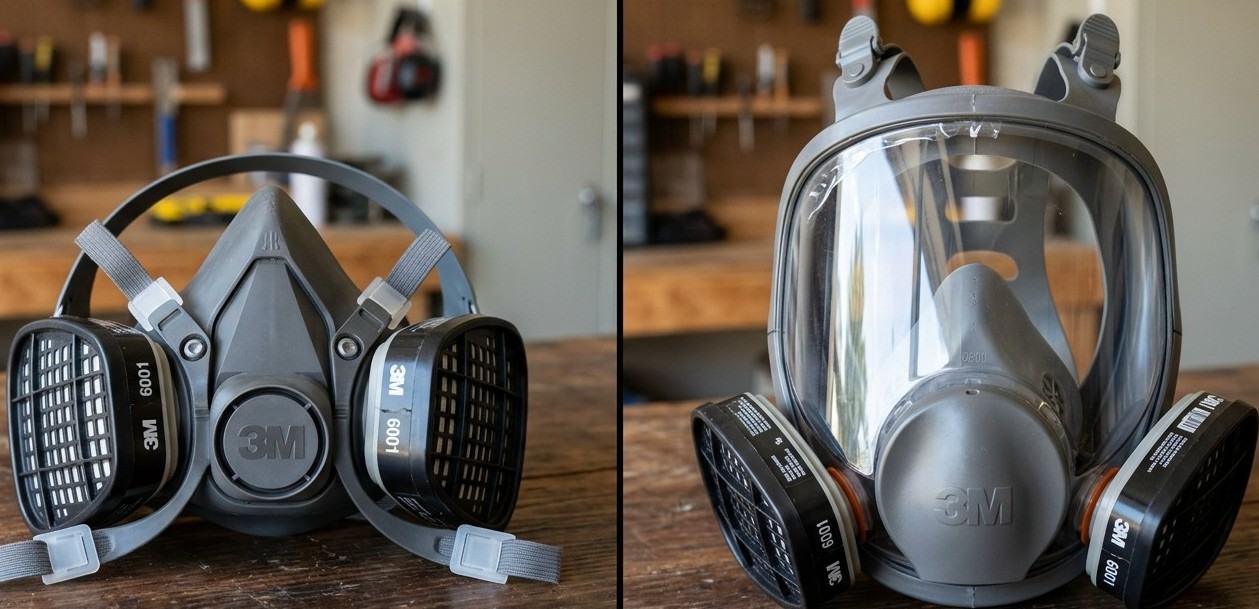
Choosing the right respirator is essential when workers are exposed to dust, fumes, gases, vapors, aerosols, or other airborne contaminants. However, selecting between a half-face respirator and a full-face respirator is not simply a matter of comfort or personal preference. The correct choice depends on the type and concentration of the hazard, required protection level, eye exposure, workplace conditions, and respirator fit.
Both types of respirators can provide effective respiratory protection when properly selected and used. The key difference is coverage. A half-face respirator protects the nose and mouth, while a full-face respirator also covers the eyes and much of the face.
A half-face respirator, also called a half-mask respirator, covers the nose and mouth while leaving the eyes exposed. Depending on its design, it can use particulate filters or replaceable cartridges for gases and vapors.
Half-face respirators are commonly used for applications involving dust, particles, fumes, and certain chemical vapors where separate eye protection is not required by the respiratory hazard. They are generally lighter and less restrictive than full-face models, making them suitable for many routine industrial applications.
For workplaces where eye protection is also required, workers may need to wear compatible safety goggles or other approved eye protection alongside the half-face respirator.
A full-face respirator covers the nose, mouth, eyes, and surrounding facial area. This design provides respiratory protection while also providing eye protection against certain airborne contaminants, irritating vapors, splashes, and other hazards, depending on the respirator’s approval and configuration.
Full-face respirators generally provide a higher assigned protection factor than half-mask air-purifying respirators. Under OSHA’s respiratory protection standard, a half-mask air-purifying respirator has an APF of 10, while a full-face air-purifying respirator has an APF of 50 when properly fitted and used under the applicable conditions.
| Feature | Half-Face Respirator | Full-Face Respirator |
|---|---|---|
| Face Coverage | Nose and mouth | Nose, mouth, and eyes |
| Eye Protection | Usually requires separate protection | Integrated |
| Typical APF for APR | 10 | 50 |
| Weight | Generally lighter | Generally heavier |
| Visibility | Open facial area | Lens provides eye coverage |
| Suitable For | Lower-level respiratory hazards where eye protection is separate | Higher protection requirements and eye-irritating hazards |
| Comfort | Often easier for routine work | More coverage but may feel more restrictive |
| Facial Protection | Limited | Greater |
The appropriate respirator should always be selected according to the actual workplace hazard rather than choosing a model simply because it offers greater coverage. OSHA requires employers to evaluate respiratory hazards and workplace factors before selecting respiratory protection.
A half-face respirator can be a practical option when the primary concern is respiratory exposure and the eyes are not exposed to the same hazard.
Typical applications can include:
For example, a worker exposed to particulate dust may require a particulate filter, while a worker exposed to an identified organic vapor may need an appropriately approved chemical cartridge.
A half-face respirator can also be preferable when workers need greater freedom of movement and reduced facial coverage. However, separate eye protection must be considered whenever the workplace hazard can affect the eyes.
A full-face respirator is generally preferable when the hazard can affect both the respiratory system and the eyes, or when a higher protection factor is required.
Full-face respirators are commonly considered for applications involving:
OSHA specifically notes that full-facepiece respirators provide eye protection and a higher APF than half-mask air-purifying respirators.
However, a full-face air-purifying respirator is not automatically suitable for every hazardous atmosphere. Air-purifying respirators must not be used in oxygen-deficient or IDLH atmospheres. Such environments require appropriate atmosphere-supplying respiratory protection, such as certain SCBA or supplied-air respirators.
Before purchasing respiratory protection equipment, assess the hazard rather than selecting based solely on face coverage.
Determine whether the hazard involves particulates, gases, vapors, fumes, mists, or a combination. Different filters and cartridges provide protection against different contaminants.
Knowing the contaminant concentration is essential for selecting an appropriate respirator. The required protection factor should correspond to the workplace exposure and applicable occupational exposure limits.
If the contaminant can irritate or damage the eyes, a full-face respirator may provide an important advantage. OSHA guidance highlights eye irritation as a factor that can influence respirator selection.
Both half-face and full-face tight-fitting respirators require proper fitting and fit testing under applicable respiratory protection programs. Facial hair, incorrect sizing, incompatible eyewear, and poor adjustment can compromise the face seal.
A respirator should fit the individual user correctly and be compatible with other required PPE.
Heat, humidity, work duration, physical activity, visibility, communication requirements, and workplace layout can affect respirator selection. Comfort matters because workers are more likely to use respiratory protection correctly when the equipment is practical for the job.
There is no universal winner in the half-face vs full-face respirator comparison. A half-face respirator may be the better choice for applications requiring respiratory protection without integrated eye coverage, particularly when a lower APF is adequate.
A full-face respirator may be the better option when eye protection is required or when the workplace requires a higher APF within the respirator’s approved limitations.
The most important consideration is not simply choosing the respirator with more coverage. It is matching the respirator, filter or cartridge, fit, and protection level to the identified workplace hazard.
Choosing between a half-face and full-face respirator should always be based on the specific workplace hazard, exposure level, and protection required. Half-face respirators are suitable for many applications where respiratory protection is needed, while full-face models provide additional eye and facial coverage.
When sourcing from a respirator mask supplier UAE, consider the contaminant, required protection factor, respirator fit, filter or cartridge compatibility, and working conditions. Jefflax Trading LLC can help you understand the available respiratory protection options. Contact our team for further information and product details.

March 12, 2025

March 25, 2025

April 2, 2025

April 14, 2025

April 22, 2025


