- HEAD PROTECTION
- EYE & FACE PROTECTION
- HEARING PROTECTION
- PROTECTIVE CLOTHING
- DISPOSABLE PPE
- ROAD SAFETY GEAR
- HAND PROTECTION
- FALL PROTECTION
- FOOT PROTECTION
- FIRE SAFETY GEAR
- RESPIRATORY PROTECTION
- SCBA
- GAS DETECTORS

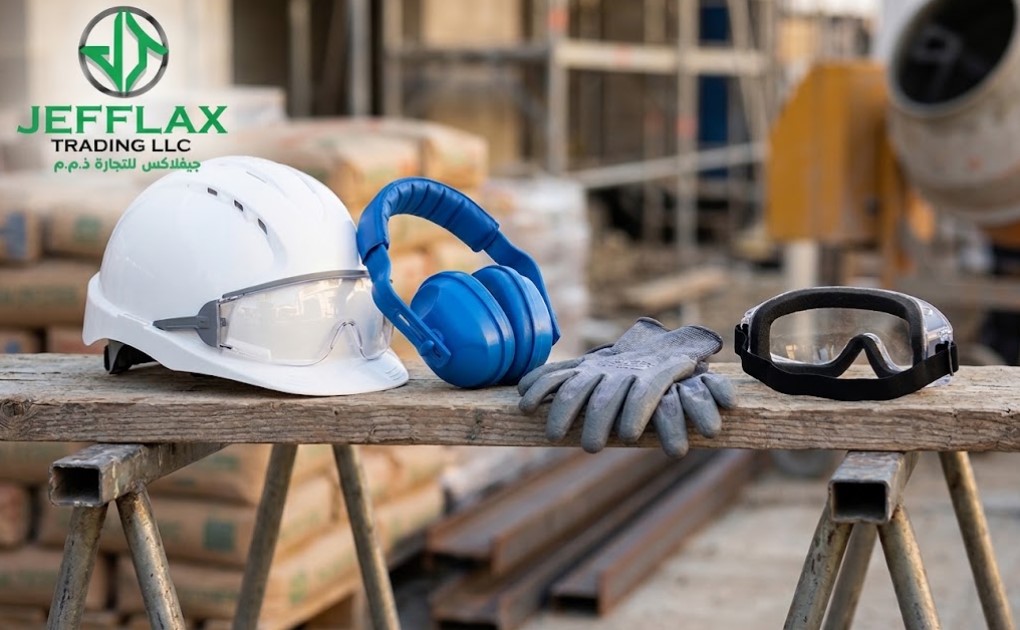
Workplace injuries rarely come from one dramatic failure. They come from small gaps: a cracked helmet shell, a respirator with the wrong filter, a missing eye wash station near a chemical store. Workplace safety equipment closes those gaps.
Across the UAE, construction, oil and gas, logistics, and manufacturing sites are tightening safety audits. Insurers, main contractors, and regulators now expect documented personal protective equipment (PPE) programs, not just a box of gear in a storeroom.
This guide explains which safety gear you need, how to match it to real hazards, and how to buy it without costly mistakes.
Workplace safety equipment is the protective gear, devices, and emergency stations that shield workers from physical, chemical, and environmental hazards. It acts as the last line of defense when engineering and administrative controls cannot remove a risk, and it supports legal compliance, insurance requirements, and worker confidence on every shift.
Safety professionals rank controls using the hierarchy of controls: eliminate, substitute, isolate, change procedures, then protect the worker with PPE. Equipment sits at the bottom of that ladder, yet it is the layer that decides whether an unexpected event becomes a near miss or a lost-time injury.
Good programs also treat gear as a system. A helmet, goggles, and ear defenders must fit together without breaking each other’s seal or comfort.
Most sites need six core categories: head, eye, hearing, respiratory, and foot protection, plus emergency eye wash capability. The exact mix depends on your hazard assessment, but these categories cover the majority of impact, noise, dust, chemical, and slip risks found in industrial and commercial workplaces.
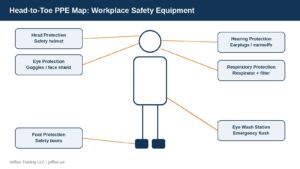
Workers need an industrial safety helmet from a certified head protection range, rated for impact and penetration, with a suspension system that absorbs shock. Choose electrical-rated shells near live circuits and add a chin strap for work at height.
Replace any helmet after a significant blow, even when no crack is visible. Check the manufacturing date stamped inside the shell. UV exposure in the Gulf climate degrades plastics faster than many buyers expect.
Safety glasses, goggles, and face shields from a certified eye protection range prevent most workplace eye injuries when matched to the hazard. Glasses handle flying particles, sealed goggles block dust and splashes, and face shields add coverage during grinding or chemical handling.
Look for anti-fog and scratch-resistant coatings. Prescription wearers should use over-glasses or prescription safety lenses instead of removing protection.
An eye wash station delivers a controlled flow of clean water to flush contaminants from the eyes within seconds. Injured workers should reach it in roughly 10 seconds, with a clear path and no doors in the way.
Delay is the main factor that turns a splash into permanent damage. Plumbed units suit fixed work areas. Portable and self-contained units cover remote or temporary sites, but they need scheduled checks and fluid replacement.
Earplugs suit moderate noise and long wear, while earmuffs suit intermittent exposure and high noise levels. Select a product from a hearing protection range by its noise reduction rating against the measured decibel level on your site.
Over-protection can be as risky as under-protection because workers may miss alarms. Combine plugs and muffs only for extreme noise, such as heavy fabrication or blasting zones.
Choose respiratory protection by the contaminant: particulate masks for dust, half-face respirators with cartridges for vapors and gases, and supplied-air systems for oxygen-deficient spaces.
The wrong filter gives a false sense of safety. Always confirm fit, because facial hair and poor seals defeat the best filter. Schedule fit testing and cartridge change-out intervals before issuing any respirator.
Steel or composite toe-cap safety boots with slip-resistant outsoles work best for most industrial sites. Add midsole protection against nails, metatarsal guards for heavy handling, and heat-resistant soles for hot surfaces.
Browse certified foot protection options, and note that composite toes suit electrical and metal-detector environments. Boots should be comfortable enough to wear all day. Uncomfortable footwear gets left off.
Start with a written hazard assessment, then map each hazard to a protection type and a performance standard. This turns a generic shopping list into a defensible safety program that auditors, insurers, and your own supervisors can verify task by task.
| Hazard | Primary Gear | Common Standard |
|---|---|---|
| Falling objects | Safety helmet | EN 397 |
| Flying particles, splashes | Goggles, face shield | EN 166 |
| Noise above 85 dB | Earplugs, earmuffs | EN 352 |
| Dust, vapors, fumes | Respirator with correct filter | EN 149 |
| Crush, puncture, slips | Safety boots | ISO 20345 |
| Chemical contact with eyes | Eye wash station | ANSI Z358.1 |
Treat the table as a baseline. Confined spaces, hot work, and chemical storage need their own task-specific assessment.
Jefflax Trading LLC supplies industrial PPE from Deira, Dubai, UAE. Review the matrix above against your hazard assessment, then visit our location to explore suitable safety gear in person and get guidance on your workplace requirements.
Choose gear that carries a recognized certification mark, fits the specific worker, and matches the documented hazard. Verify the standard on the product label, request the manufacturer’s test documentation, and confirm the item suits your climate and task duration before placing a bulk order.
The U.S. Occupational Safety and Health Administration explains employer duties for hazard assessment, selection, and training in its personal protective equipment guidance, a useful baseline even for sites that follow EN or ISO standards.
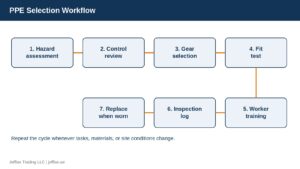
Apply this evaluation checklist before every purchase:
The most common mistakes are issuing the wrong rating, skipping fit tests, ignoring expiry dates, and failing to train workers. Gear that is available but unworn, damaged, or incompatible offers no protection and creates liability on top of the injury risk.
Watch for these failure vectors:
Build a simple inspection log. A two-minute check at shift start catches most defects before they matter.
Yes. Workplace safety equipment is a practical necessity for any site with physical, noise, dust, or chemical exposure. The cost is small compared with medical bills, downtime, and compliance penalties, provided the gear matches the hazard and workers actually wear it.
For low-risk office settings, a minimal first-aid and eye wash setup may be enough. For industrial and construction work, a full head-to-toe program is the sensible baseline. Start with a hazard assessment, buy certified items, train your crew, and inspect regularly.
Get the right personal protective equipment for your team’s safety requirements. Contact Jefflax Trading to discuss your needs, receive expert product recommendations, and request a competitive quote for your site.
Most industrial workplaces require head, eye, hearing, respiratory, and foot protection, plus access to an eye wash station where chemicals are present. Your hazard assessment determines the exact list, and local regulations or client rules may add requirements such as high-visibility clothing or fall protection.
Replace PPE after any damage, significant impact, or contamination, and follow manufacturer lifespans. Helmets, filters, and eye wash fluids all have service or expiry limits. Inspect gear at the start of each shift and keep a written log for audits.
PPE is gear worn by an individual, such as helmets, goggles, and boots. Safety equipment is the broader category and also includes fixed or emergency items like eye wash stations, fire extinguishers, and first-aid kits. Both support a complete workplace safety program.

March 12, 2025

March 25, 2025

April 2, 2025

April 14, 2025

April 22, 2025


