- HEAD PROTECTION
- EYE & FACE PROTECTION
- HEARING PROTECTION
- PROTECTIVE CLOTHING
- DISPOSABLE PPE
- ROAD SAFETY GEAR
- HAND PROTECTION
- FALL PROTECTION
- FOOT PROTECTION
- FIRE SAFETY GEAR
- RESPIRATORY PROTECTION
- SCBA
- GAS DETECTORS

The construction industry across the GCC is one of the most active and demanding in the world. From Dubai’s iconic skyline projects to Saudi Arabia’s Vision 2030 mega-developments and Qatar’s infrastructure expansions, thousands of workers operate daily in high-risk environments.
Protecting these workers is not optional it is a legal, ethical, and operational requirement.
Dubai has emerged as the go-to sourcing hub for safety equipment across the Gulf region. With its world-class logistics infrastructure, deep product availability, and proximity to major construction markets, a reliable safety equipment supplier in Dubai can serve project sites across the UAE, Saudi Arabia, Qatar, Oman, Kuwait, and Bahrain with speed and compliance.
This guide covers everything construction procurement managers, HSE officers, and site supervisors need to know when sourcing safety gear for GCC projects.
Construction in the Gulf region comes with challenges that go beyond standard worksite hazards.
Extreme heat, fine desert dust, high UV exposure, and round-the-clock shift work create conditions where standard-grade PPE simply falls short.
Workers on high-rise towers, marine bridges, oil-adjacent infrastructure, and industrial facilities need equipment that is:
Regulatory bodies across the GCC — including UAE’s Ministry of Human Resources and Emiratisation, Saudi Arabia’s OSHA-aligned standards, and Qatar’s Worker Welfare Standards — all mandate specific protective equipment on construction sites. Non-compliance can lead to project shutdowns, penalties, and reputational damage.
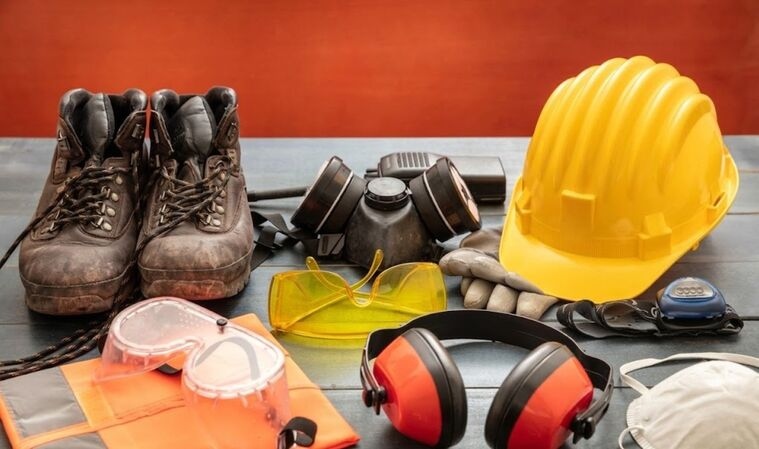
Hard hats and industrial helmets are the most visible form of protection on any construction site. For GCC conditions, ventilated helmets with UV-resistant shells are highly recommended.
Working with a trusted helmet supplier UAE ensures access to certified head protection solutions that meet international safety standards and the demanding conditions of GCC construction environments. Bump caps and helmet accessories like chin straps and reflective bands add further protection in active work zones.
Flying debris, concrete dust, grinding sparks, and chemical splashes are everyday hazards in construction. Safety goggles, polycarbonate visors, and full-face shields provide the necessary barrier. Look for products with anti-fog and anti-scratch coatings for extended use in Gulf heat.
Dust, silica, and chemical vapors are serious health risks on construction sites. Half-face and full-face respirators with the right filter cartridges protect workers in painting zones, grinding areas, and cement-heavy operations. Disposable FFP2 and FFP3 dust masks are essential for daily on-site protection.
From cut-resistant gloves used in steel fixing and rebar work to impact-resistant gloves for heavy equipment operators, hand protection is one of the most frequently consumed PPE categories on construction sites. Nitrile, leather, and thermal variants address different task-specific risks.
Steel-toe safety boots with anti-slip soles, puncture-resistant midsoles, and anti-static properties are mandatory on most GCC construction sites. For wet zones or marine-adjacent projects, waterproof safety footwear adds critical protection.
Fire-retardant coveralls, arc flash suits, and high-visibility vests are essential for workers exposed to electrical hazards or operating near heavy machinery and vehicles. For GCC-specific conditions, lightweight and breathable fabrics that meet FR standards are the preferred choice for summer operations.
Work at height remains one of the leading causes of construction fatalities in the region. Full-body harnesses, shock-absorbing lanyards, self-retracting lifelines, and anchor systems must meet EN 361 and ANSI Z359 standards. These products require regular inspection and documentation, which a quality supplier should support.
Earplugs and earmuffs rated to the appropriate SNR (Signal-to-Noise Ratio) protect workers in high-decibel environments — particularly near heavy machinery, jackhammers, and demolition zones.
Safety does not stop at personal protective equipment. Maintaining a genuinely safe construction site also requires accurate environmental and equipment monitoring. Test measurement equipment UAE suppliers play a critical role here, providing tools that detect real-time hazards before they escalate.
Gas detectors, noise level meters, dust particle counters, thermal cameras, and electrical safety testers are all part of a comprehensive site safety programme.
When integrated with PPE protocols, test and measurement tools allow site safety officers to make data-driven decisions — identifying when respiratory protection needs to be upgraded, when hearing protection zones need to be extended, or when environmental conditions have crossed acceptable thresholds.
For GCC construction projects, where worksites often span multiple zones with varying hazard levels, having calibrated and certified measuring instruments is as important as the PPE itself.
When it comes to trusted PPE brands across the GCC construction sector MSA Safety equipment UAE is a name that consistently appears on approved vendor lists for major projects. MSA (Mine Safety Appliances) is a globally recognized manufacturer of head protection, gas detection, fall protection, and respiratory equipment.
MSA hard hats, self-contained breathing apparatus (SCBA), and gas detection systems are widely used across UAE construction, oil and gas, and infrastructure projects.
Their products meet rigorous international certification standards and are designed for the demanding thermal and operational conditions found across the GCC.
Sourcing MSA safety equipment through a reliable Dubai-based supplier ensures product authenticity, proper documentation, and after-sales support — all of which are critical for HSE-audited project sites.
Not all suppliers are equal. When evaluating a safety equipment supplier for GCC construction projects, consider the following:
Product Certification and Compliance Every product should come with traceable certifications — EN standards for European-spec products, ANSI/OSHA for American-aligned projects, and ISO-certified quality processes. Fake or uncertified PPE is a serious risk that undermines worker safety and creates legal exposure.
Inventory Depth and Lead Times Construction projects operate on tight timelines. A supplier with local warehouse stock in Dubai or Ajman can fulfil bulk orders and emergency replenishments without the delays of overseas shipping. This is especially critical for fast-moving projects in Saudi Arabia, Qatar, and Oman.
Sector-Specific Expertise A supplier that understands the difference between requirements for a high-rise tower in Dubai versus a marine infrastructure project in Abu Dhabi brings measurable value. Look for suppliers with dedicated teams serving construction, oil and gas, and marine sectors.
Cross-GCC Export Capability Dubai’s position as a regional trade hub means reputable suppliers can export to all GCC countries efficiently. Verify that the supplier has experience managing export documentation, country-specific import requirements, and last-mile delivery to remote project sites.
Technical Support and Product Training PPE is only effective when used correctly. A quality supplier should offer product training, fitting guidance, and technical documentation to ensure workers get the full protection each item is designed to provide.
High-Rise Construction: Dubai’s skyline and the skyscraper projects emerging across Riyadh, Lusail City, and Muscat require head protection, fall arrest systems, and body protection at scale.
Road and Infrastructure: Highway construction across the UAE and Saudi Arabia demands hi-visibility wear, footwear, and hearing protection for workers operating near heavy vehicles.
Marine and Coastal Projects: Port expansions, bridge construction, and coastal infrastructure require waterproof PPE, life jackets, and anti-slip solutions suited to wet environments.
Industrial and Power Projects: Power plants, desalination facilities, and industrial zones require arc flash protection, electrical safety gear, and respiratory equipment suited to chemical environments.
Oil and Gas Adjacent Construction: Pipeline installations and refinery infrastructure projects demand flame-resistant coveralls, gas detection equipment, and specialized chemical-resistant PPE.
Dubai’s advantage as a safety equipment supply base goes beyond geography. The emirate offers a mature trading ecosystem, multilingual procurement support, competitive wholesale pricing, and access to global brands and manufacturers.
Procurement teams across the GCC consistently choose Dubai-based suppliers because of the reliability, speed, and compliance readiness they offer.
Suppliers operating from Dubai’s free zones — such as Ajman Free Zone and Jebel Ali — benefit from streamlined export processes, making cross-border delivery to Saudi Arabia, Qatar, Kuwait, Bahrain, and Oman both efficient and cost-effective.
Selecting the right safety equipment supplier is essential for protecting construction workers from the real and serious hazards present on GCC job sites — from falling objects and chemical exposure to extreme heat and electrical risks.
At Jefflax Trading LLC, we understand the importance of reliable, certified PPE and safety solutions in maintaining workplace safety and compliance across the region’s most demanding projects.
For trusted safety equipment and expert industrial safety solutions, connect with Jefflax to equip your workforce with certified protection and ensure safer working environments across every GCC project site.
Discover expert guides on workplace safety, protective equipment, and industrial best practices to help you create a safer working environment in the UAE.

March 12, 2025

March 25, 2025

April 2, 2025

April 14, 2025

April 22, 2025


